


















Lesson 21 of 47 · Bleeding, Wounds and Shock
Shock: Recognition and First Aid
Learn what circulatory shock is, the main types, how to recognize it from pale, cold skin and a fast pulse, and the first-aid steps while you wait for help.
In everyday speech, "shock" means a sudden emotional jolt. In first aid and medicine it means something quite different and far more dangerous: circulatory shock, a state in which the body's tissues are not receiving enough blood and oxygen. The heart, brain and kidneys can be damaged within hours, and without treatment the person may die. A person can look stable one minute and collapse the next, so recognizing the early signs and acting before the situation worsens is the main job of the first aider.
Educational information only. This lesson is not a substitute for a certified first-aid course or for medical care. Shock is a medical emergency. Call your local emergency number as soon as you suspect it.
What you will learn
- What circulatory shock is and the main causes.
- How the body compensates, and the early and late signs.
- The first-aid actions: treat the cause, position, warmth, reassurance, monitoring.
- What to avoid, and how shock differs from fainting.
- How a simple measurement, the shock index, relates heart rate and blood pressure.
Key terms
Shock (circulatory): failure of the circulation to supply enough oxygen to the tissues.
Hypovolaemic shock (US: hypovolemic): shock caused by too little blood volume, such as bleeding or severe dehydration.
Compensation: the body's early responses, such as a faster heart rate and narrowed vessels, that keep vital organs supplied.
Perfusion: the flow of blood through the tissues.
Capillary refill: the time it takes for color to return to a fingernail after pressing it; longer than about 2 seconds suggests poor circulation.
Causes of shock
Circulation needs three things: enough blood (volume), a working pump (the heart) and vessels that are the right size (tone). Shock results when any of these fails.
| Type | Cause | Examples |
|---|---|---|
| Hypovolaemic | Too little fluid in the circulation | Severe bleeding, burns, vomiting and diarrhea, severe dehydration |
| Cardiogenic | The heart cannot pump well | Heart attack, severe heart failure |
| Distributive | Blood vessels open too wide | Anaphylaxis (severe allergy), sepsis (severe infection), spinal cord injury |
| Obstructive | Something blocks flow | Large blood clot in the lungs, fluid around the heart, collapsed lung under pressure |
For a first aider, the commonest and most treatable cause is bleeding, so that is where you start. You do not need to identify the type exactly; the first-aid actions are broadly similar, and the main task is to recognize that the person is very unwell and call for professionals.
How the body compensates
When blood flow falls, the body fights back. Sensors in the arteries trigger the nervous system to release adrenaline. The heart beats faster, vessels in the skin and gut narrow to send blood to the brain, heart and lungs, and breathing speeds up. Those changes explain the signs you see:
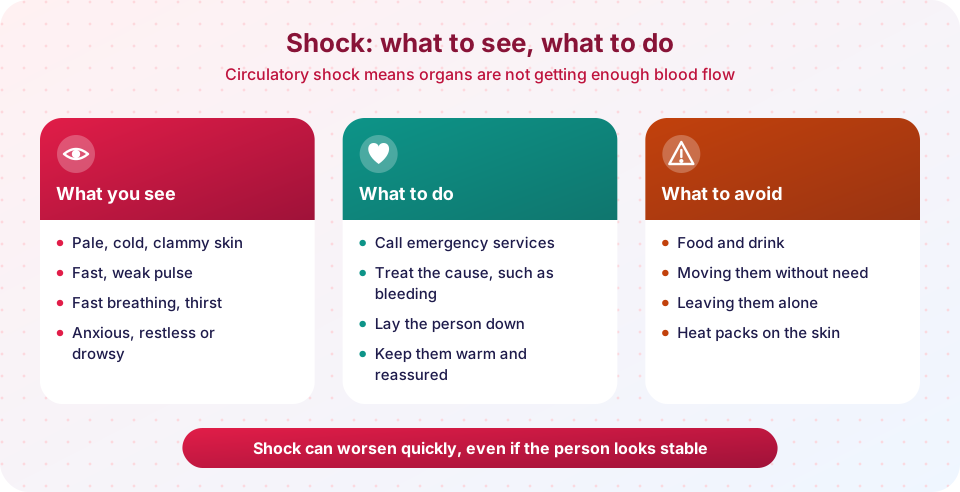
- Pale, cold, clammy skin, because blood is diverted away from the skin and sweat glands activate.
- Fast, weak pulse, because the heart is working harder but pumping less per beat.
- Fast breathing, because tissues crave oxygen.
- Anxiety and restlessness, followed later by confusion or drowsiness as the brain gets less oxygen.
- Thirst, because the body senses fluid loss.
- Nausea or vomiting.
In this early compensated stage, blood pressure may still be normal, so a person can look deceptively well. Young and fit adults can compensate for a long time and then deteriorate suddenly. Children also compensate well, and a fast heart rate may be the only early sign.
When compensation fails, blood pressure falls. Then you will see very weak or absent pulse at the wrist, blue or mottled skin, drowsiness, loss of consciousness and eventually cardiac arrest. Reaching this stage is dangerous; the aim is to act before it.
The shock index
Health professionals sometimes use a quick ratio called the shock index: heart rate divided by systolic blood pressure. In healthy adults it is usually around 0.5 to 0.7. A value above about 0.9 to 1.0 raises concern for significant blood loss or shock, although thresholds vary and many other factors matter. The idea is that when pressure falls and pulse rises, the ratio rises, often earlier than a single number reveals. First aiders rarely have a blood-pressure monitor, but the ratio illustrates the logic of compensation: pulse goes up first, pressure falls later.
Press Run (or Ctrl + Enter) to see the result here.
Program input · what you'd type while the program runs
Type the answers before you press Run, one per line. Each time the program reads a line (with input()), it gets the next line from this box.
First aid for shock
- Check danger, then call emergency services. Say you suspect shock, and why.
- Treat the cause. Stop severe bleeding with the methods in the previous lesson. Cool a burn, support a broken bone, give the person's own prescribed adrenaline for a severe allergy if you are trained and authorized. Treating the cause is the most effective way to treat shock.
- Lay the person down on a flat surface, in the position that is most comfortable. Lying flat helps blood reach the brain. Many courses add raising the legs about 30 cm if there is no injury to the legs, spine, head or chest; research on this is limited, and several modern guidelines advise simply lying flat. If the person is short of breath, they may prefer to be propped up; if vomiting or unconscious, use the recovery position.
- Keep them warm. Cover them with a blanket or coat, and put insulation under them from the cold ground. Even in mild weather, blood loss and shock make people cold, and cold worsens bleeding and recovery. Do not use hot-water bottles or heat pads on the skin.
- Loosen tight clothing at neck and waist.
- Reassure and stay with them. Speak calmly, explain what is happening and what you are doing. Fear raises the heart rate and oxygen need.
- Give nothing by mouth. The person may need surgery and an empty stomach, and might vomit. If they are very thirsty, you may moisten their lips.
- Monitor continuously. Watch breathing, color, pulse and alertness every few minutes. Note changes and tell the ambulance crew. Be ready to start CPR if they become unresponsive and stop breathing normally.
Do not leave the person alone, do not let them walk about and do not assume they are fine because they are talking.
Shock versus fainting
Fainting (syncope) is a brief loss of consciousness because blood pressure momentarily drops, for example after standing quickly, a sight of blood, pain or heat. The person falls, their brain gets more blood when they are flat, and they usually recover within a minute or two. Help them lie flat, raise their legs and make sure they recover fully, and check whether they were injured in the fall. If they do not recover quickly, are injured, have chest pain or are confused, call emergency services. Shock, by contrast, persists and often worsens.
Press Run (or Ctrl + Enter) to see the console output here.
No output.
Common misconceptions
"Give a hot drink and a sweet to treat shock." Never give food or drink; it can cause vomiting and may delay surgery.
"They are talking, so they are fine." People in compensated shock can look and sound well and then deteriorate quickly.
"Shock is an emotional reaction." Emotional shock exists, but circulatory shock is a life-threatening physical state.
"Elevating the legs is always essential." Evidence is limited; lying flat is the key step, and legs should not be raised if injured.
Check your understanding
Quick check · 5 questions
of 5 answered You scored / 5 · perfect!
-
1. What does circulatory shock mean?
Shock is inadequate perfusion of the organs. -
2. Which signs suggest shock?
The body diverts blood from the skin and the heart beats faster. -
3. What is the most effective way to treat hypovolaemic shock in first aid?
Stopping the loss is the most important step. -
4. Which should you NOT give to a person in shock?
Nothing by mouth because of vomiting and possible surgery. -
5. How is fainting different from shock?
Fainting usually resolves within minutes; shock does not.
Summary
- Shock means insufficient blood flow to the organs; causes include blood loss, heart failure, severe allergy, sepsis and more.
- Early signs: pale, cold, clammy skin, fast weak pulse, fast breathing, anxiety, thirst; later: drowsiness and low blood pressure.
- Call early, treat the cause, lay the person down, keep warm, give nothing by mouth, reassure and monitor.
- Distinguish shock from fainting; if in doubt, call emergency services.
Next: Chapter 4 Review
Track your progress
Create a free account to tick off lessons and pick up where you left off on any device.
of First Aid and Emergency Care lessons completed