


















Lesson 33 of 47 · Environmental Emergencies
Chapter 7 overview: environmental emergencies
An overview of first aid for heat, cold, burns, electric shock, drowning, bites, stings and poisons, and the key rule: make the scene safe for you before you help.
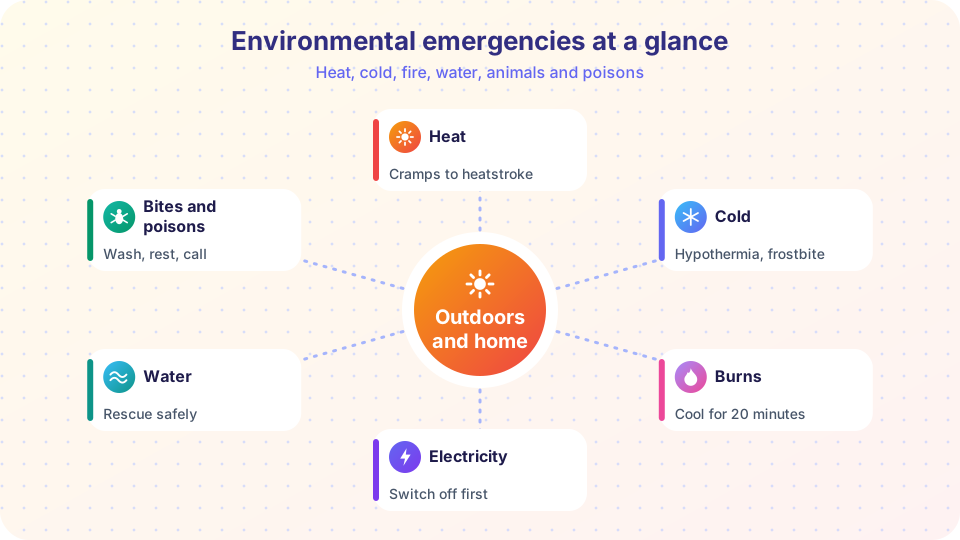
The body works within a narrow range of conditions: a core temperature close to 37 degrees Celsius, air to breathe, no corrosive or toxic substances. The world does not always stay inside those limits. A hot day, a freezing night, a kitchen fire, a faulty cable, a deep pool, a snake in the grass or a cleaning product within a toddler's reach can all push the body beyond what it can handle. These are environmental emergencies: the cause comes from the surroundings.
They share one rule that sets them apart from the rest of first aid: the hazard that hurt the person can hurt you. A rescuer who touches a live wire, jumps into rough water or enters a smoky room becomes a second casualty. So this chapter begins and ends with the same habit: make sure the scene is safe, remove or stay away from the hazard, then treat the person.
Educational information, not medical advice. This chapter explains general first-aid principles as taught in international guidelines. It cannot replace a certified first-aid course, local wilderness or water-safety training or the instructions of emergency services. Climate, wildlife and poison risks differ widely between regions; learn the local ones. In a real emergency call your local emergency number.
What you will learn
- How heat illness and cold injury develop in stages, and how to cool or warm a person safely.
- How to treat burns and scalds, what to do about electric shock and how to respond to drowning without becoming a victim.
- How to handle animal bites, stings, ticks and poisoning.
- The "scene safety first" rule for hazards that can hurt you too.
Key terms
- Core temperature: the temperature of the body's inner organs, normally about 37 °C.
- Heatstroke: a life-threatening heat illness in which the body temperature climbs above about 40 °C and the brain is affected.
- Hypothermia: a core temperature below 35 °C.
- Scald: a burn caused by hot liquid or steam.
- Poison center: a service staffed by specialists who advise on poisonings, reached by phone.
Why the environment matters
Humans keep a steady core temperature by balancing heat made by the body with heat lost to the surroundings. Sweating, blood flow to the skin and shivering all adjust the balance. When the environment is too hot or too cold, or when the person is a child, an older adult, ill or exhausted, those controls fail. Burns, electricity and water add other dangers: tissue damage, abnormal heart rhythm, and lack of oxygen.
The general approach is the same as everywhere in first aid, with extra attention to the first step:
- Scene safety. Switch off the power, move away from traffic, do not enter deep or fast water, avoid smoke and chemical fumes.
- Move the person out of the hazard if you can do so safely: out of the sun, into shelter, away from the water's edge.
- Check responsiveness and breathing. CPR comes before any other treatment if they are not breathing normally.
- Treat the specific problem: cool, warm, cool the burn, flush the chemical.
- Call emergency services early. Many of these emergencies deteriorate.
Chapter 7: six hazards
And three more
Your safety comes first.
What each lesson covers
- Heat and cold covers heat cramps, heat exhaustion, heatstroke, hypothermia and frostbite.
- Burns, electric shock and drowning explains cooling burns, chemical burns, electrical safety and how to help someone in water.
- Bites, stings and poisons covers animal bites, snakes, insects, ticks, poisoning and carbon monoxide.
- Chapter 7 review pulls it together.
Try it
For each situation, choose the safest first move. In every case the scene comes first. This is a study demonstration.
Check your understanding
Quick check · 4 questions
of 4 answered You scored / 4 · perfect!
-
1. What is the special rule of environmental emergencies?
Rescuers who ignore the hazard become casualties. Scene safety comes first. -
2. Normal core body temperature is about:
Core temperature is about 37 °C. Below 35 °C is hypothermia, and above about 40 °C with confusion suggests heatstroke. -
3. Which is the correct response to a person drowning when you are not trained?
Reach, throw, do not go. -
4. You find a person near a live cable. What do you do first?
Only approach once the power is off, or the hazard is dealt with by experts.
Summary
- Environmental emergencies come from heat, cold, fire, electricity, water, animals and poisons.
- Scene safety is the rule that matters most: you cannot help if you become a casualty.
- Move the person from the hazard if safe, check breathing, treat the specific problem, call early.
- This course is educational; learn the local hazards and take certified training.
Next: Heat and cold
Track your progress
Create a free account to tick off lessons and pick up where you left off on any device.
of First Aid and Emergency Care lessons completed