


















Lesson 37 of 47 · Environmental Emergencies
Chapter 7 review: environmental emergencies
Review chapter 7: heat illness, hypothermia, frostbite, burns, electric shock, drowning, bites, stings and poisons, with a one-page picture, a recap table and a ten-question quiz.
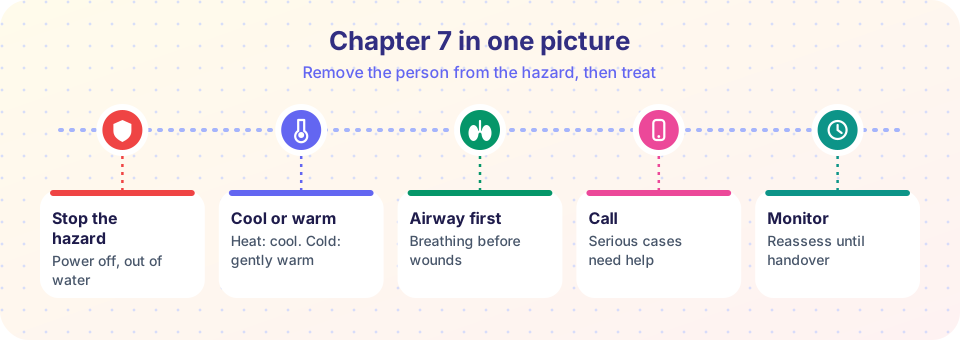
The environment can overwhelm the body in many ways, but the first-aid response follows a pattern you can learn. Stop or avoid the hazard, move the person out of danger if you can do so safely, check breathing, treat the specific problem and call for help. This review puts the whole chapter on one page, gives you a recap table to scan, a short drill and a ten-question quiz.
Reminder: this is educational information, not a substitute for a certified first-aid course, local safety training or emergency services. Hazards such as snakes, ticks and poisons vary by region; learn your local ones and save local emergency numbers in your phone.
What you will learn
- How to recall the key first-aid action and the key mistake for each hazard.
- How to apply the five-step pattern to a situation you have not seen before.
- Where each of these emergencies becomes a call to emergency services.
Recap table
| Hazard | Key sign | Key first aid | Common mistake |
|---|---|---|---|
| Heat exhaustion | Heavy sweating, pale, clammy, nausea | Cool place, lie down, cool the skin, sip fluids | Ignoring it until heatstroke |
| Heatstroke | Hot skin, confusion, about 40 °C or more | Call, cool fast, ideally immerse in cold water | Giving drinks to a confused person |
| Hypothermia | Shivering, clumsy, confused, later drowsy | Shelter, remove wet clothes, insulate, handle gently | Alcohol, rubbing, a hot bath |
| Frostbite | Hard, white, waxy, numb skin | Rewarm in warm water only if no refreezing risk | Rubbing, direct heat |
| Burn or scald | Red, blistered or white, painful | Cool running water for 20 minutes, cover loosely | Ice, butter, bursting blisters |
| Chemical burn | Burning pain after contact | Brush off dry chemical, flush 20 minutes or more | Neutralizing with another chemical |
| Electric shock | Burns, collapse, cannot let go | Switch off power first, then CPR if needed | Touching the person while live |
| Drowning | Silent struggle, unresponsive after rescue | Reach or throw, five breaths then CPR | Going in untrained |
| Bite or sting | Wound, pain, swelling | Wash, remove sting or tick, watch for allergy | Cutting and sucking a snake bite |
| Poisoning | Depends on substance | Call poison center, keep container | Forcing vomiting |
| Carbon monoxide | Headache, dizziness, several people unwell | Fresh air, call, do not re-enter | Staying to open windows too long |
The five-step pattern
- Stop the hazard safely: switch off, step back, move away from the heat or the water.
- Cool or warm as the situation demands: cool burns and heatstroke; insulate and gently warm the very cold.
- Airway and breathing first. If the person is not breathing normally, start CPR.
- Call early and describe what you see in one sentence.
- Monitor and hand over, telling the crew what happened and when.
Try it
Pick the first-aid action for each hazard. The drill gives you instant feedback and keeps a score.
Check your understanding
Quick check · 10 questions
of 10 answered You scored / 10 · perfect!
-
1. What is the first priority at any environmental emergency?
The hazard that hurt the person can hurt you. Make it safe first. -
2. How long do you cool a burn with cool running water?
Twenty minutes of cool running water, not ice. -
3. Which sign separates heatstroke from heat exhaustion?
Heatstroke affects the brain: confusion, seizures or collapse with a core temperature around 40 °C or more. -
4. What should you avoid when warming a hypothermic person?
Alcohol and rubbing do harm. Insulate and warm the trunk gently. -
5. When is it acceptable to rewarm frostbitten fingers?
Thawing and refreezing causes more damage. -
6. What is the safest rescue for a drowning person for an untrained helper?
Reach, throw, do not go. -
7. What do you do first for a person in contact with a live household appliance?
Break the contact safely; do not touch the person first. -
8. Why not make a poisoned person vomit?
Forced vomiting is not recommended. Call the poison center. -
9. What is the correct way to remove a tick?
Steady, straight pull with fine tweezers. -
10. Several people in a house have headaches and dizziness near a gas heater. What do you do?
This is a classic carbon monoxide pattern. Get out and call.
Summary
- Stop the hazard, cool or warm, protect the airway, call, monitor.
- Cool burns and heatstroke; insulate and gently warm the very cold.
- Switch off power, reach or throw, never go in untrained.
- Wash bites, remove stings and ticks properly, never cut a snake bite, never force vomiting.
- Fresh air and a call for carbon monoxide; install alarms.
Next: Chapter 8 overview: preparedness and special situations
Track your progress
Create a free account to tick off lessons and pick up where you left off on any device.
of First Aid and Emergency Care lessons completed