


















Lesson 28 of 45 · Daily Life and Questions
Question Words and Hal
Learn the Arabic question words mā, mādhā, man, ʾayna, matā, kayfa, limādhā, kam and hal, with examples, answers and practice games.
Questions are the engine of conversation. If you can ask Where is it? How much is it? Do you speak English? you can get directions, buy things, and keep a talk going for hours. Arabic questions are friendlier than English ones: there is no "do" to add and no word order to flip. You choose a question word, say it first, and then speak as normal.
There are only about nine question words you need at the start, and you have met several already. This lesson gives each one a home, with examples built from the present-tense verbs you know.
What you will learn
- The nine key question words and what each asks about
- The difference between مَا and مَاذَا
- How to ask a yes/no question with هَلْ and answer with نَعَمْ or لَا
- How to give a reason with لِأَنَّ (because)
Key terms
Interrogative: a word that asks a question, like مَنْ (who).
Yes/no question: a question answered with yes or no, started by هَلْ in Arabic.
Question mark (؟): the Arabic question mark. It looks like a backwards English one, because Arabic runs right to left.
Because (لِأَنَّ): the word that introduces a reason.
The question words
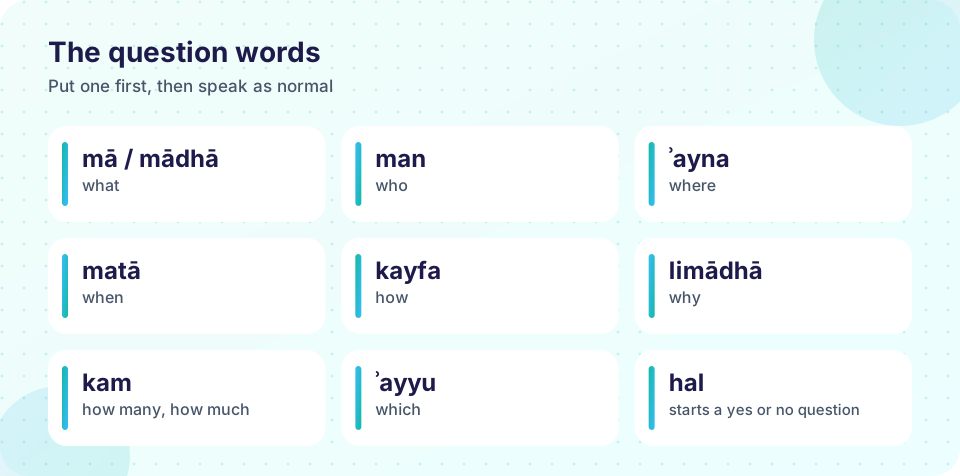
| Arabic | Transliteration | Asks about | Example |
|---|---|---|---|
| مَا | mā | what (with nouns, "what is...?") | مَا اسْمُكَ؟ (mā ismuka?) What is your name? |
| مَاذَا | mādhā | what (with verbs) | مَاذَا تَشْرَبُ؟ (mādhā tashrabu?) What do you drink? |
| مَنْ | man | who | مَنْ هَذَا؟ (man hādhā?) Who is this? |
| أَيْنَ | ʾayna | where | أَيْنَ تَسْكُنُ؟ (ʾayna taskunu?) Where do you live? |
| مَتَى | matā | when | مَتَى تَذْهَبُ؟ (matā tadhhabu?) When do you go? |
| كَيْفَ | kayfa | how | كَيْفَ حَالُكَ؟ (kayfa ḥāluka?) How are you? |
| لِمَاذَا | limādhā | why | لِمَاذَا تَدْرُسُ العَرَبِيَّة؟ (limādhā tadrusu l-ʿarabiyya?) Why do you study Arabic? |
| كَمْ | kam | how many, how much | كَمْ عُمْرُكَ؟ (kam ʿumruka?) How old are you? |
| أَيُّ | ʾayyu | which | أَيُّ لُغَة تَتَكَلَّمُ؟ (ʾayyu lugha tatakallamu?) Which language do you speak? |
Mā or mādhā?
Both mean what. As a rule of thumb, مَا goes with a noun or a pronoun in an "X is what?" question (مَا اسْمُكَ؟, مَا هَذَا؟ what is this?), while مَاذَا goes before a verb (مَاذَا تَفْعَلُ؟ what are you doing?, مَاذَا تَشْرَبُ؟). If you mix them up, people still understand you.
Question words that join a preposition
Some questions need a small word in front. مِنْ أَيْنَ أَنْتَ؟ (min ʾayna ʾanta?) means where are you from?, literally "from where are you?". بِكَمْ هَذَا؟ (bi-kam hādhā?) means how much is this?, literally "for how much is this?". You will use that second question every time you shop.
Questions without a verb
Just as simple statements need no to be, many questions have none either. أَيْنَ المَدْرَسَة؟ (ʾayna l-madrasa?) is "where the school?", which means where is the school?. Put the question word first, then the thing you ask about.
Gender in questions
Whenever you address someone, the "you" changes for a man and a woman: اسْمُكَ (ismuka) for a man and اسْمُكِ (ismuki) for a woman; تَذْهَبُ (tadhhabu) for a man and تَذْهَبِينَ (tadhhabīna) for a woman. When you ask a stranger, choose according to who is in front of you. A small slip here is easily forgiven.
Yes/no questions with هَلْ
To turn any statement into a yes/no question, put هَلْ (hal) in front. Nothing else changes.
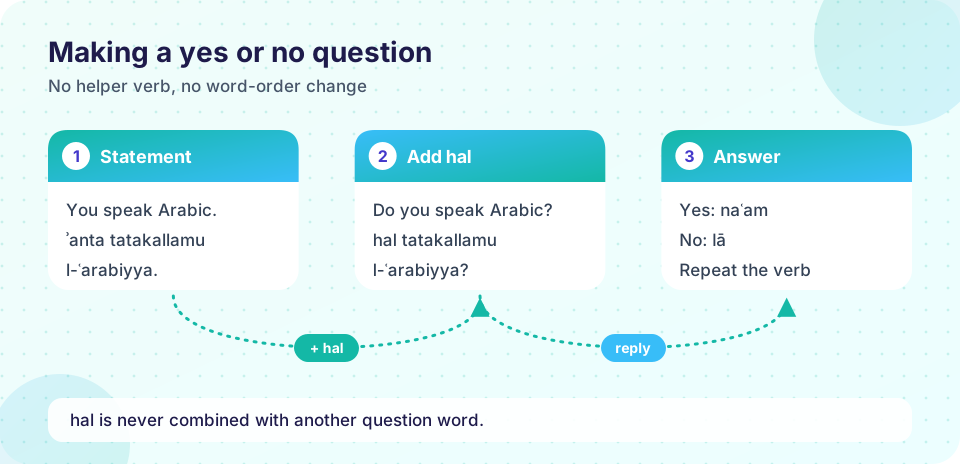
- Statement: أَنْتَ تَتَكَلَّمُ العَرَبِيَّة. (You speak Arabic.)
- Question: هَلْ أَنْتَ تَتَكَلَّمُ العَرَبِيَّة؟ or simply هَلْ تَتَكَلَّمُ العَرَبِيَّة؟ (hal tatakallamu l-ʿarabiyya?) Do you speak Arabic?
- Answers: نَعَمْ (naʿam, yes) or لَا (lā, no). A natural reply repeats the verb: نَعَمْ، أَتَكَلَّمُ العَرَبِيَّة قَلِيلًا. (Yes, I speak Arabic a little.) or لَا، لَا أَتَكَلَّمُ العَرَبِيَّة.
You can say هَلْ with a noun sentence too: هَلْ هَذَا كِتَابُكَ؟ (hal hādhā kitābuka?) Is this your book?
هَلْ cannot be combined with another question word. You say أَيْنَ تَسْكُنُ؟, never "hal ʾayna taskunu". Pick one or the other.
Giving a reason: لِأَنَّ
When someone asks لِمَاذَا؟ you can answer with لِأَنَّ (li-ʾanna, because). With I, it joins the pronoun and becomes لِأَنِّي (li-ʾannī):
- لِمَاذَا تَدْرُسُ العَرَبِيَّة؟ (Why do you study Arabic?)
- لِأَنِّي أُحِبُّ العَرَبِيَّة. (li-ʾannī ʾuḥibbu l-ʿarabiyya.) Because I love Arabic.
A short dialogue
| Arabic | English |
|---|---|
| مِنْ أَيْنَ أَنْتِ؟ (min ʾayna ʾanti?) | Where are you from? (to a woman) |
| أَنَا مِنْ كَنَدَا. وَأَنْتَ؟ (ʾanā min kanadā. wa-ʾanta?) | I am from Canada. And you? |
| أَنَا مِنْ مِصْر. هَلْ تَسْكُنِينَ هُنَا؟ (ʾanā min miṣr. hal taskunīna hunā?) | I am from Egypt. Do you live here? |
| نَعَمْ، أَسْكُنُ فِي المَدِينَة. (naʿam, ʾaskunu fī l-madīna.) | Yes, I live in the city. |
Answering each kind of question
Learning to ask is half the skill; the other half is recognizing what kind of answer the speaker expects. Each question word pulls a particular type of answer.
- مَنْ (who) expects a person: مَنْ هَذَا؟ هَذَا أَخِي. (Who is this? This is my brother.)
- مَا / مَاذَا (what) expects a thing: مَاذَا تَشْرَبُ؟ أَشْرَبُ القَهْوَة. (What do you drink? I drink coffee.)
- أَيْنَ (where) expects a place, usually introduced by فِي or مِنْ: أَيْنَ تَسْكُنُ؟ أَسْكُنُ فِي المَدِينَة.
- مَتَى (when) expects a time: غَدًا, فِي السَّاعَة الثَّامِنَة.
- كَيْفَ (how) expects a manner or a state: بِخَيْر (fine), بِالسَّيَّارَة (by car).
- لِمَاذَا (why) expects a reason starting with لِأَنَّ.
- كَمْ (how many) expects a number, and the question itself changes grammar: كَمْ كِتَابًا عِنْدَكَ؟ (kam kitāban ʿindaka?, how many books do you have?). After كَمْ the thing counted appears in the singular with a tanwin fatha. The answer might be عِنْدِي ثَلَاثَة كُتُب.
When you listen to fast speech, do not try to catch every word. Catch the question word, and you immediately know what the answer should look like. Even if you miss the rest, you can reply with a number, a place or a name, and the conversation continues.
Questions with a preposition
Several questions are built from a preposition plus a question word, and they are worth learning as ready-made chunks. مِنْ أَيْنَ؟ (min ʾayna, from where) asks about origin. إِلَى أَيْنَ؟ (ʾilā ʾayna, to where) asks about direction: إِلَى أَيْنَ تَذْهَبُ؟ means "Where are you going?". مَعَ مَنْ؟ (maʿa man, with whom) asks about company: مَعَ مَنْ تَسْكُنُ؟ (Whom do you live with?). بِكَمْ؟ (bi-kam, for how much) asks about price. Notice that in Arabic the preposition stays in front of the question word, like the formal English to whom, instead of dangling at the end of the sentence.
Asking politely and softly
Questions can sound abrupt if you fire them one after another. Native speakers soften them. You can begin with لَوْ سَمَحْتَ (excuse me), add مِنْ فَضْلِكَ (please) at the end, or open with a greeting and a thank-you. Compare the plain أَيْنَ المَطْعَم؟ with the friendlier لَوْ سَمَحْتَ، أَيْنَ المَطْعَم؟ شُكْرًا. The extra words cost two seconds and change the whole feeling of the exchange. When you are learning, this is also a gift to yourself: the polite opening gives you a moment to think of the question word.
Common question phrases to learn as chunks
Some questions are so frequent that you should learn them as single units and not build them each time. Keep this short list in your pocket: مَا اسْمُكَ؟ (what is your name?), مِنْ أَيْنَ أَنْتَ؟ (where are you from?), كَمْ عُمْرُكَ؟ (how old are you?), أَيْنَ تَسْكُنُ؟ (where do you live?), مَاذَا تَعْمَلُ؟ (what do you do for work?), هَلْ تَتَكَلَّمُ الإِنْجِلِيزِيَّة؟ (do you speak English?) and مَا هَذَا؟ (what is this?). Each of these appears in the first minutes of nearly every first meeting, so practice them until they come out without thought.
Then practice the answers in the same breath. The goal is to be able to ask a question and also answer it yourself, so that you can reply when someone asks you the same thing. Do this out loud for two minutes a day. Pair the questions with a partner if you can, and swap who asks first; the one who asks first practices fluency, while the one who answers practices listening.
Common misconceptions
"Arabic needs a helper verb like do." It does not. Do you drink tea? is just هَلْ تَشْرَبُ الشَّاي؟, with the ordinary verb.
"Hal is the same as the question word what." هَلْ asks for yes or no. To ask what, use مَا or مَاذَا.
"The question mark goes the English way." The Arabic mark is ؟, a mirror image, and it sits at the end of the sentence, which on the page is the left side.
Try it
Choose the right question word for each answer.
Now build real questions from scrambled words.
Check your understanding
Quick check · 5 questions
of 5 answered You scored / 5 · perfect!
-
1. Which word starts a yes/no question?
hal is placed before a statement to turn it into a yes/no question. -
2. How do you ask "How much is this?"
bi-kam hādhā? is literally "for how much is this?". -
3. Which question word fits "___ تَشْرَبُ؟" (what do you drink?) best?
mādhā goes before a verb: mādhā tashrabu? -
4. What does لِأَنِّي mean?
li-ʾannī is li-ʾanna (because) joined with the pronoun "I". -
5. Which answer is correct for هَلْ تَسْكُنُ هُنَا؟
A yes/no question is answered with naʿam or lā, often repeating the verb.
Summary
- Put the question word first; no helper verb and no inversion are needed.
- مَا is for "what is..."; مَاذَا is for "what" before a verb.
- هَلْ + statement = yes/no question; answer with نَعَمْ or لَا.
- لِأَنَّ introduces a reason; لِأَنِّي means because I.
- Choose -ka/-ki and تَـ-u/-īna to match the person you address.
Next: Numbers, days and time
Track your progress
Create a free account to tick off lessons and pick up where you left off on any device.
of Arabic for Beginners lessons completed