
























레슨 26 · Basic Needs and Comfort
Hygiene and Dignity
Learn how to support washing, mouth care and dressing while protecting privacy, choice, comfort, culture and independence for each person.
Help with washing, mouth care and dressing may look routine. For the person receiving it, it can feel very personal. They may feel shy, cold, tired or worried about losing independence.
Good hygiene care supports health and comfort. It is also a chance to notice changes and to show respect.
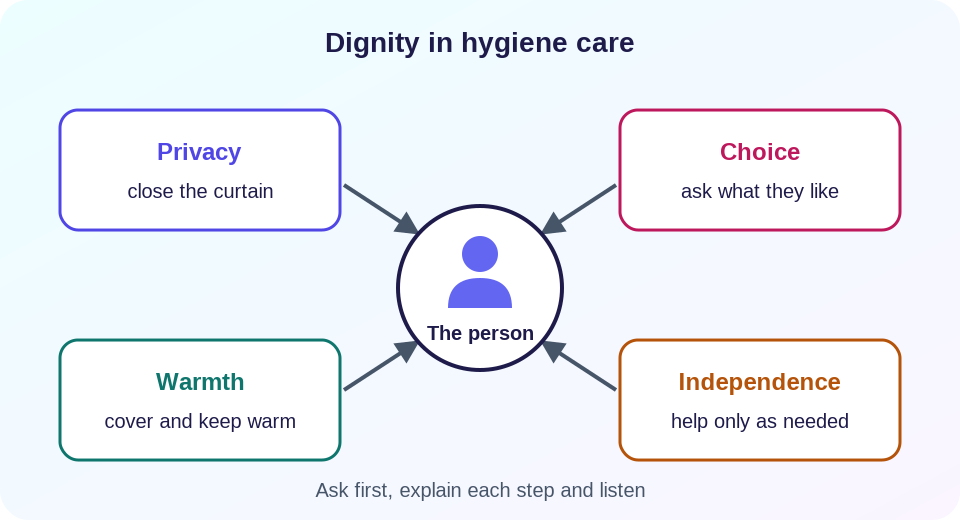
What you will learn
- How to prepare for hygiene care that respects the person
- How to support independence
- Key points for mouth care and skin
- What to observe and report
Start with the person
Check the care plan, then ask the person:
- "How do you usually like to wash, and when?"
- "What can you do yourself, and where would you like help?"
- "Do you have preferences about who helps you?"
- "Is there anything about your religion or culture I should know?"
Some people prefer a carer of the same gender. Some have routines tied to prayer or family customs. Try to meet these needs within safety and local policy. If you cannot, explain honestly and ask your supervisor about options.
Consent and communication
Ask before you begin and before touching private areas. Explain each step. A person can say no. A refusal is not "being difficult". Stop, listen and find the reason. They may be in pain, cold, afraid or too tired. Offer another time or another way, and tell the nurse, especially if refusing care may harm health.
For a person with memory problems, use calm short sentences, give one step at a time, and let them hold a cloth or brush. Familiar routines help. Never force care.
Privacy and warmth
- Close doors, curtains or blinds, and knock before entering.
- Uncover only the part you are washing.
- Keep the room comfortably warm.
- Have all supplies ready, so you do not leave the person exposed.
- Test water temperature safely as your policy directs. Some people cannot feel heat well and can burn easily.
- Keep the call bell within reach, and never leave a person alone in a bath or shower if the plan requires supervision.
Support independence
Doing everything for someone may be quicker, but it can reduce skill and confidence. Set up items within reach, give time and help only with the parts the person cannot safely do. "You wash your face and arms, and I'll help with your back" respects ability.
Washing and skin
General good practice is to move from cleaner areas to less clean ones, to change cloths and water when needed, and to dry gently, including skin folds and between the toes. Use gloves and other PPE according to standard precautions when you may touch body fluids or broken skin. Clean your hands before and after.
Foot care needs special care. Cutting nails may be restricted, particularly for people with diabetes or poor blood flow. Follow your role and policy.
Mouth care
Mouth care matters for comfort, eating, speaking and health. Germs in the mouth can contribute to chest infections in some people, especially if they are inhaled.
- Offer care at least as often as the care plan says.
- Check for dry lips, sores, white patches, bleeding, loose teeth or pain, and report them.
- Clean dentures as directed and store them labeled. Handle them over a soft surface or water so they do not break if dropped.
- A person who has trouble swallowing or is not fully awake is at risk of inhaling fluid. Special positioning and methods are needed, performed only by trained staff following the plan.
Dressing and grooming
Let the person choose clothes where possible. Grooming, such as hair care or shaving, affects identity. Ask before cutting or changing hair. When one side of the body is weaker, a common principle is to dress the weaker side first and undress it last. A therapist can advise.
Observe while you care
Hygiene time is a good time to notice:
- skin color changes, sores, rashes, bruises or swelling
- pain with movement
- changes in the mouth
- unusual body smells or drainage
- changes in mood, thinking or strength
Unexplained bruises or injuries may raise safeguarding concerns. Tell the responsible person according to your policy. Do not investigate on your own, and do not promise secrecy.
A worked example
Mrs. Santos refuses a morning wash. A student could insist, but instead asks quietly, "Is something bothering you about washing now?" She says the room is cold and she prefers evenings. The student offers to help her wash face and hands now, passes her preference to the nurse, and the plan is updated for an evening wash.
Keeping linen and items safe
Collect clean linen just before you need it, and do not return unused linen from a person's room to the shared supply unless policy allows it. Put used linen straight into the correct bag or bin. Do not put it on the floor or on another person's bed. Keep each person's toiletries separate and labeled. Before you leave, check that the person is comfortable, covered and dry, and that their glasses, drink and call bell are within reach.
Common mistakes
- Leaving the person uncovered while collecting supplies.
- Talking over the person to a coworker.
- Doing tasks the person can do safely.
- Treating refusal as unimportant or forcing care.
- Forgetting mouth care when busy.
Try it
Check your understanding
Quick check · 4 questions
of 4 answered You scored / 4 · perfect!
-
1. A person refuses a wash. What is the best first response?
Refusal often has a reason, and the person has a right to be heard. -
2. How can you support independence during washing?
People keep skills and confidence when they do what they safely can. -
3. Why test water temperature?
Reduced sensation raises the risk of burns. -
4. You see unexplained bruises. What should you do?
Safeguarding concerns go through the proper route.
Summary
- Ask about preferences, culture and ability before care.
- Protect privacy and warmth, and ask consent.
- Mouth and skin care support health and comfort.
- Observe and report changes during care.
Next: Nutrition and Hydration